
Zoos · Bioparks · Aquariums
Rockwork for zoos & bioparks
Theme-park rockwork experience, applied to animal habitats — landscapes that are safe for animals, practical for keepers and real for visitors.
Why our experience fits habitats
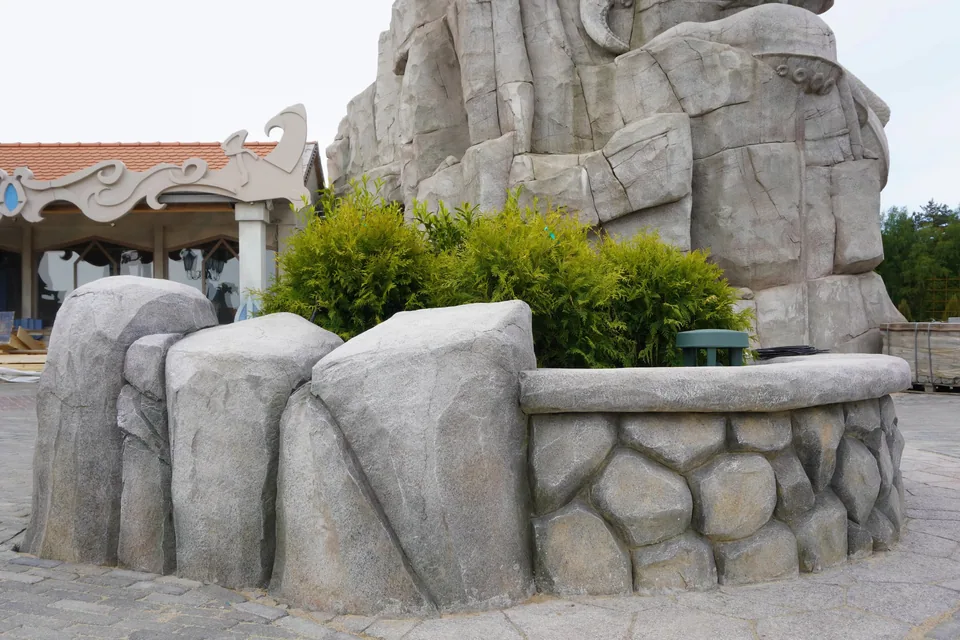
We build large artificial rock formations, cliffs and waterfalls for theme parks, where every surface has to survive weather, water and millions of visitors. The same craft — structure, shell, sculpting and colour — is what an animal habitat needs, with stricter rules for safety, water and hygiene.
What we bring
Experience from real sites
Large-scale rockwork
Rock formations, cliffs and waterfalls over 4 m high, built and exposed outdoors all year at Hossoland theme park.
Water features
Waterfalls, a water mill set into rockwork and waterside rock formations — layer systems that live with water.
Public touch zones
Surfaces that thousands of visitors touch and climb every day, made to stay safe and look natural up close.
Art and engineering
Steel frames, shells, sculpting and colour in one team — from the first sketch to installation.
Designed in from the first drawing
What habitat rockwork must do
A habitat rock is not decoration. It is part of the animal’s daily life, the keepers’ workplace and the visitors’ view.
Animal safety
No sharp edges or toxic coatings, no gaps that trap paws or claws, no climbing routes out of the enclosure.
Water and moisture
Mortars rated for permanent water contact, waterproofing behind pools and streams, drainage that keeps water moving.
Hygiene and cleaning
Shapes that can be washed down, without pockets where dirt, food and water collect.
Keeper access
Service doors, feeding points and inspection access built into the rock without breaking the illusion.
Durability
Stainless steel frames, mesh and anchors; surfaces built for frost, sun, washdown and years of use.
Visitor experience
Sightlines, viewing windows and the feeling of a real landscape — the animal in its world, not in a box.
How a rock is built
Two systems, one hand-made surface
Inside every artificial rock there is an engineered structure. Left to right, each cutaway shows the layers from the skeleton to the finished, coloured stone. We choose the system by size, load and where the rock stands.
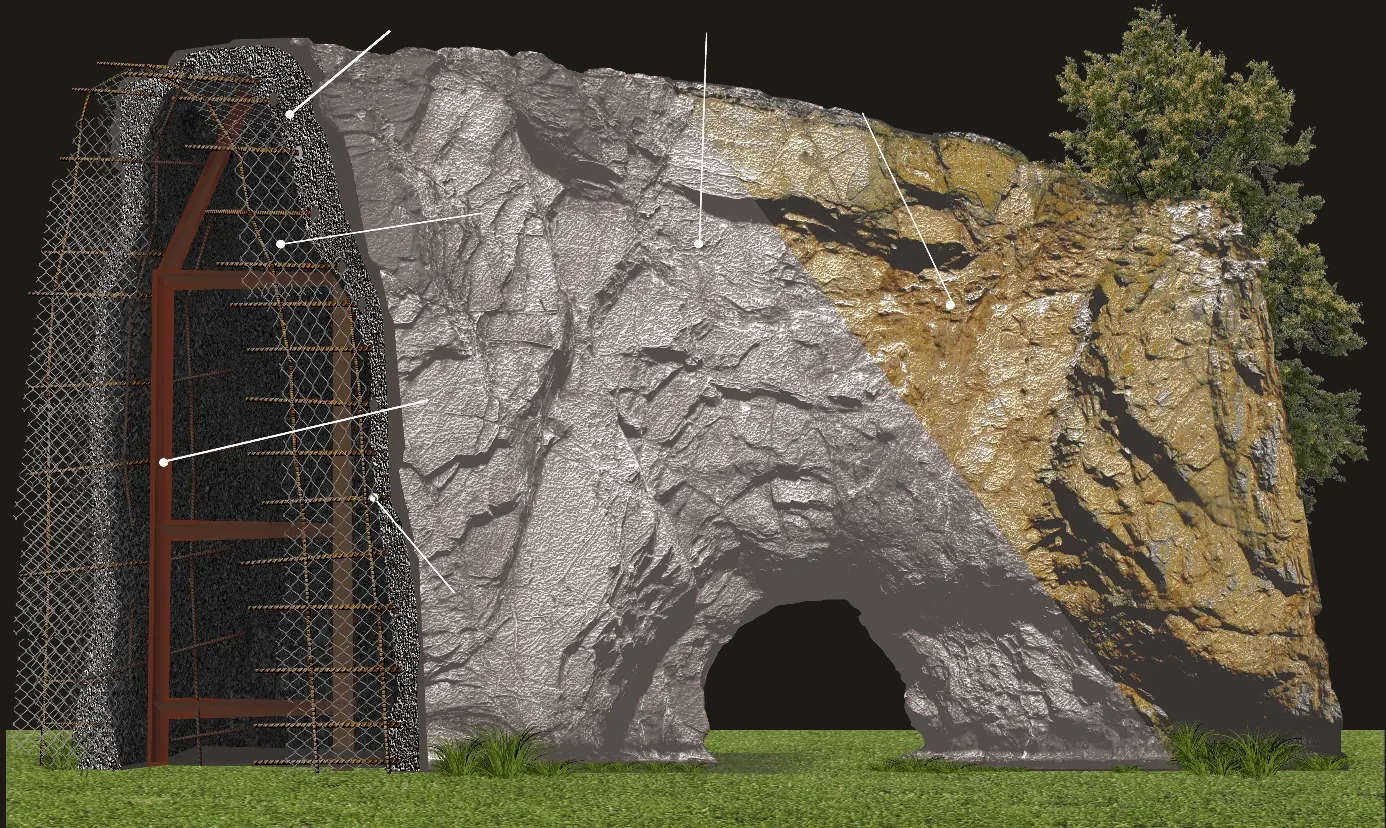
Steel frame system
For large rocks, cliffs, arches, waterfalls and anything people climb on or stand under.
- 01Steel frame Welded structural steel, designed for the load, wind and the span of arches
- 02Rebar grid Bent bars that give the rock its rough shape
- 03Mesh Galvanised mesh tied over the grid to hold the first layer
- 04Fine stainless mesh A dense stainless lath that never rusts inside the rock
- 05Structural mortar Fibre-reinforced base coat sprayed or applied onto the mesh
- 06Sculpted layer Cracks, strata and texture modelled by hand while fresh
- 07Colour & patina Layered glazes, weathering and a protective finish
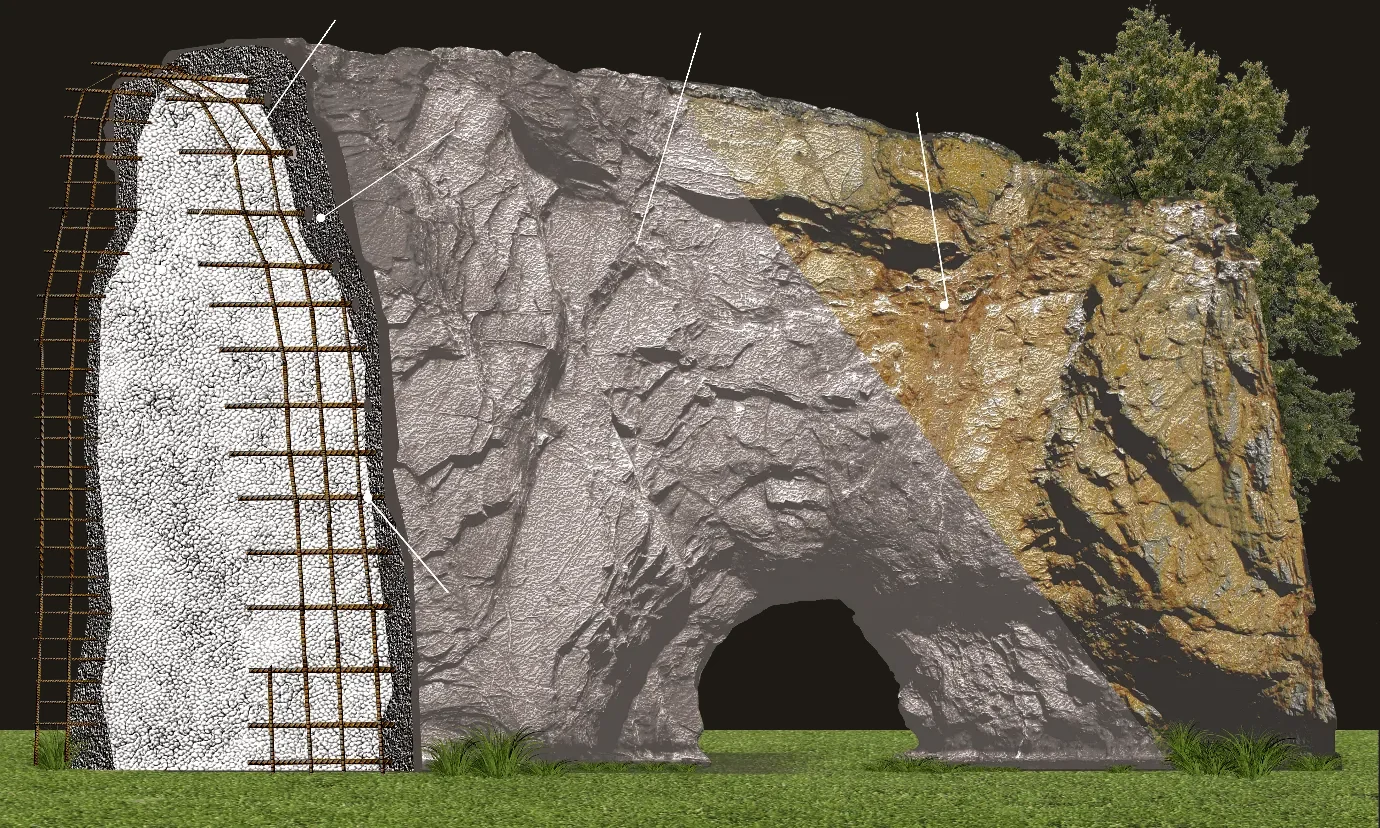
EPS core system
Lighter rocks for roofs, terraces, interiors and places where weight is limited.
- 01EPS core Expanded polystyrene blocks cut and carved to the rock form
- 02Rebar & mesh Bars and mesh anchored through the core and to the base
- 03Fine stainless mesh Stainless lath that carries the mortar shell
- 04Mortar shell Fibre-reinforced shell, thick enough to walk on where needed
- 05Sculpted layer The same hand-modelled rock surface as on the steel system
- 06Colour & patina Layered glazes, weathering and a protective finish
How we can work with you
Three ways to cooperate
Full execution
We deliver the complete rockwork package: stainless steel frames, shells, sculpting, colouring and protection.
Hybrid model
Your team builds the structure and base layer to our specification; our sculptors create the visible surface and colour.
Supervision & training
Your team builds; we set the technology, train the crew on site, inspect regularly and carry out final acceptance.
Materials: specialist sculptural mortars (Estecha), including grades for permanent water contact; stainless steel frames, mesh and anchors; protective coatings matched to each zone.
Knowledge behind the work
Books by the founder
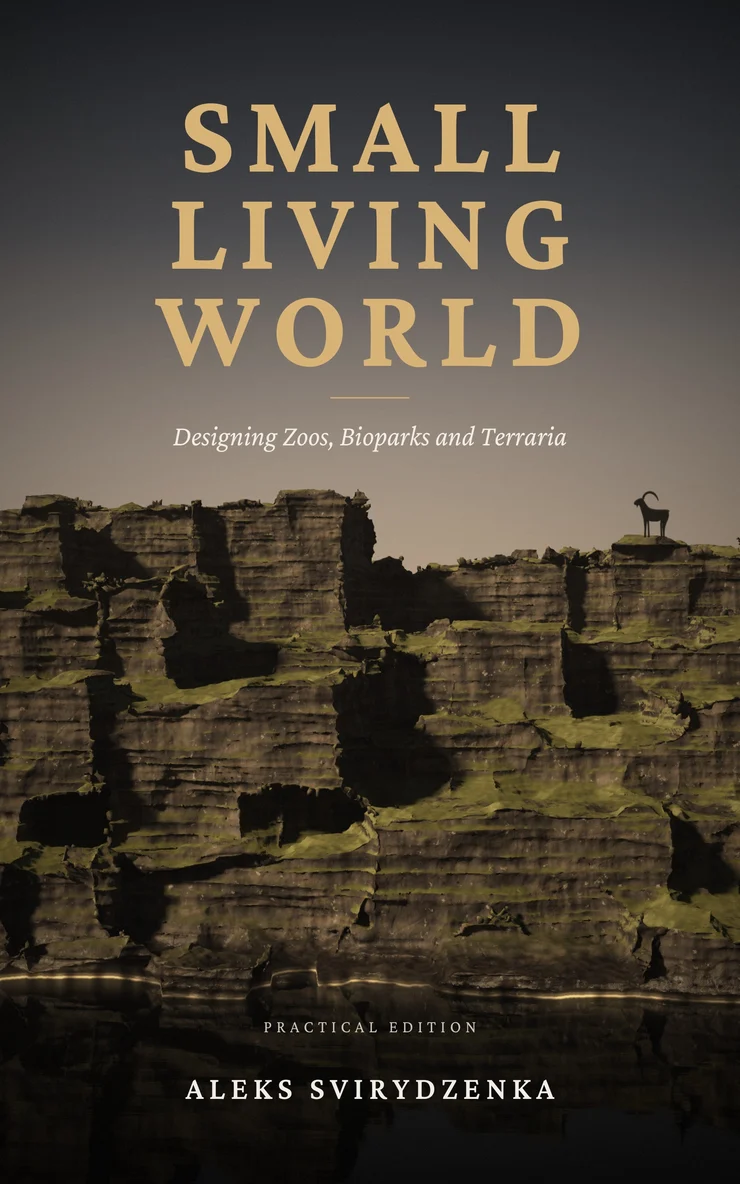
Aleks Svirydzenka writes about rockwork and habitat design — including Small Living World, a book on designing zoos, bioparks and terraria.
Start a conversation
Planning a new habitat?
Talk to us early — before the concrete is poured.
The earlier rockwork is part of the design, the safer, cheaper and more natural the result. Send us your drawings or concept and we will advise on structure, materials and the best way to cooperate.